
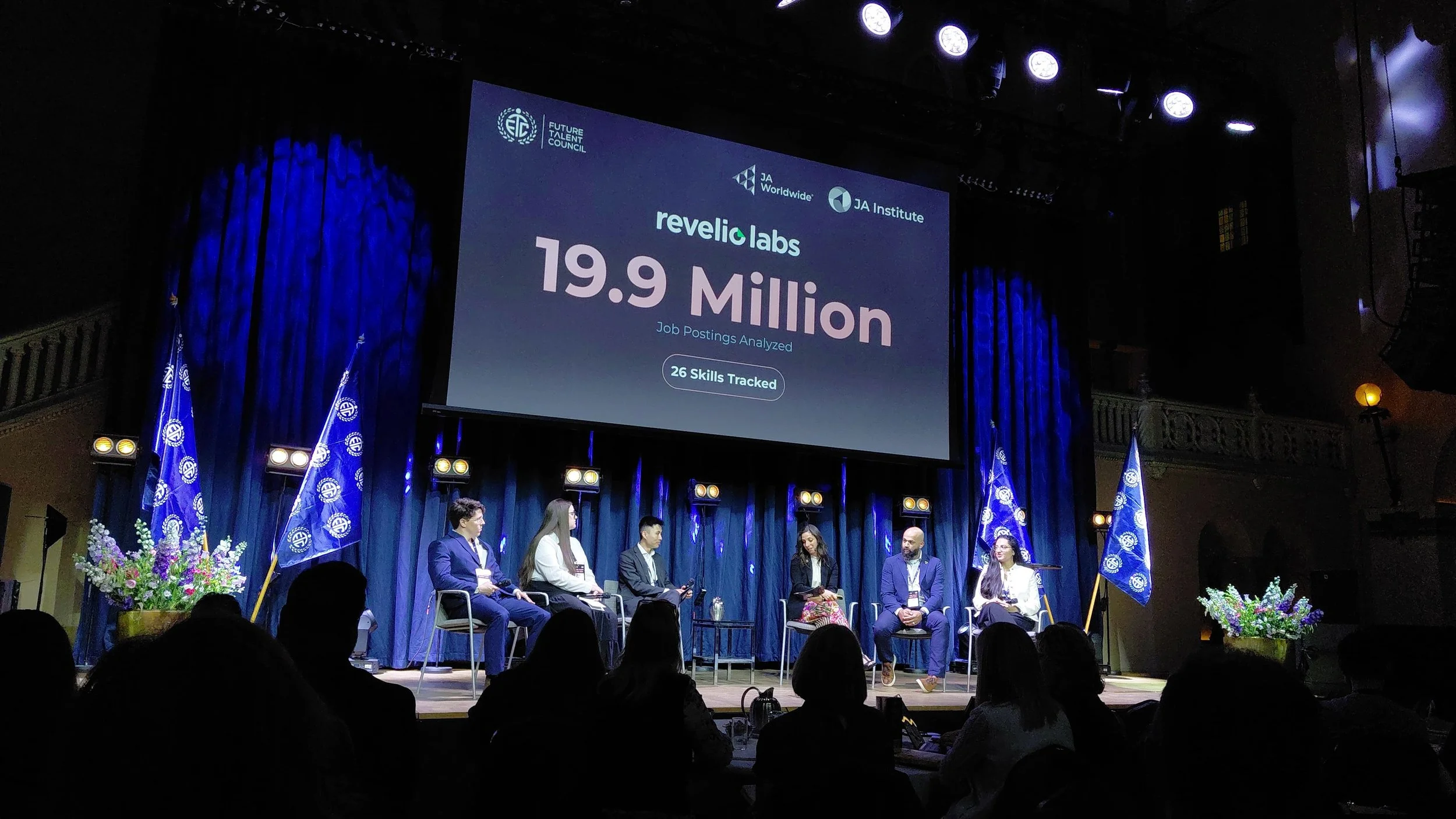
Presentation of joint research using 20 million entry-level job postings in OECD countries since 2021 with Future Talent Council and Revelio Labs
In Stockholm, JA Worldwide shared new labor market research, amplified young people’s perspectives, and strengthened connections across the global JA network.
In June 2026, JA Worldwide joined leaders from business, education, government, and civil society at the Future Talent Summit 2026 in Stockholm, Sweden. Held under the theme “From Insight to Action,” the Summit brought together more than 400 delegates representing over 50 countries to explore how technology, changing labor markets, and new expectations are reshaping work and education.
For JA Worldwide, the gathering was an opportunity to contribute evidence, listen to young people, and connect global conversations about the future of work with the practical pathways young people need today.
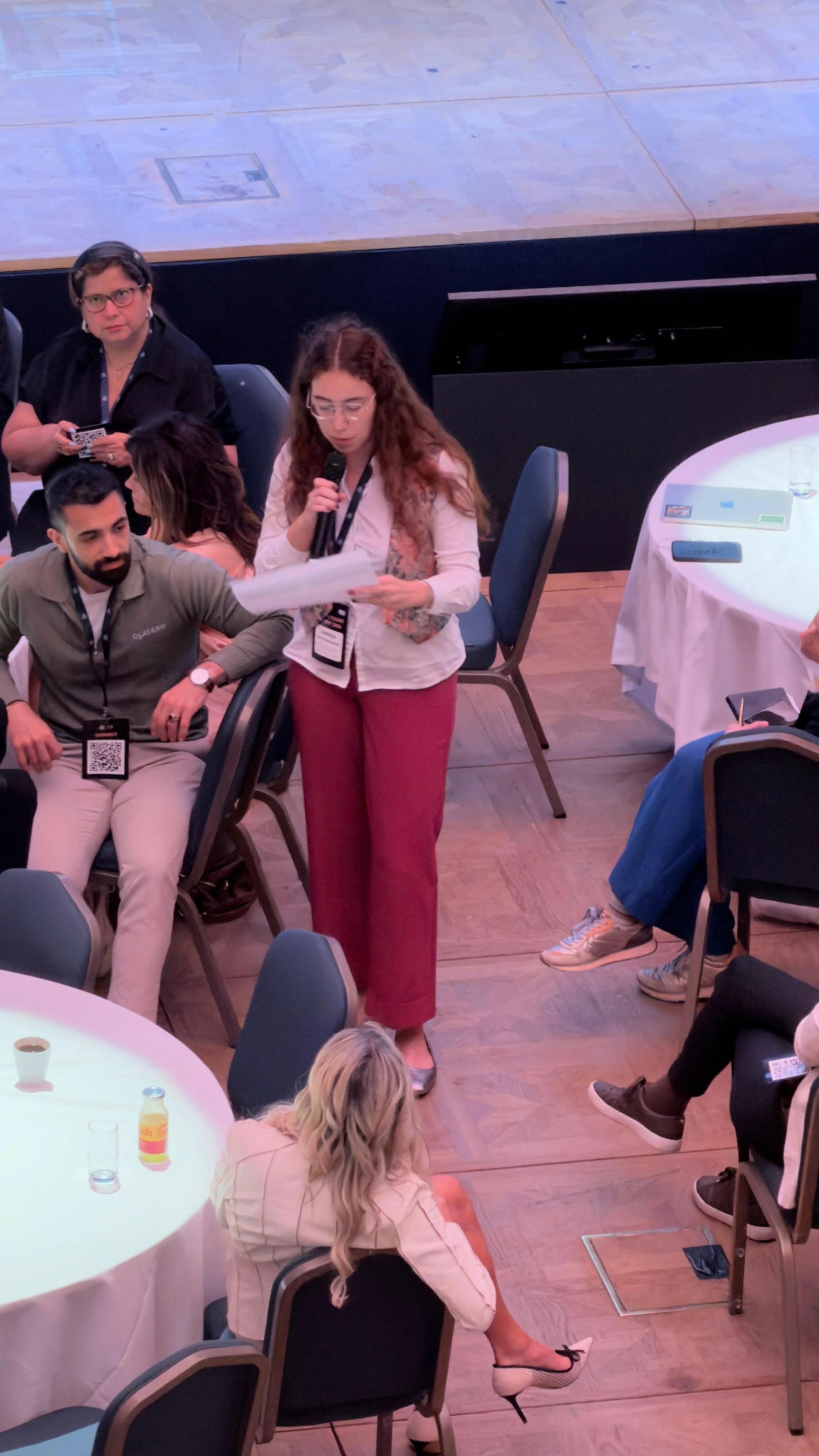
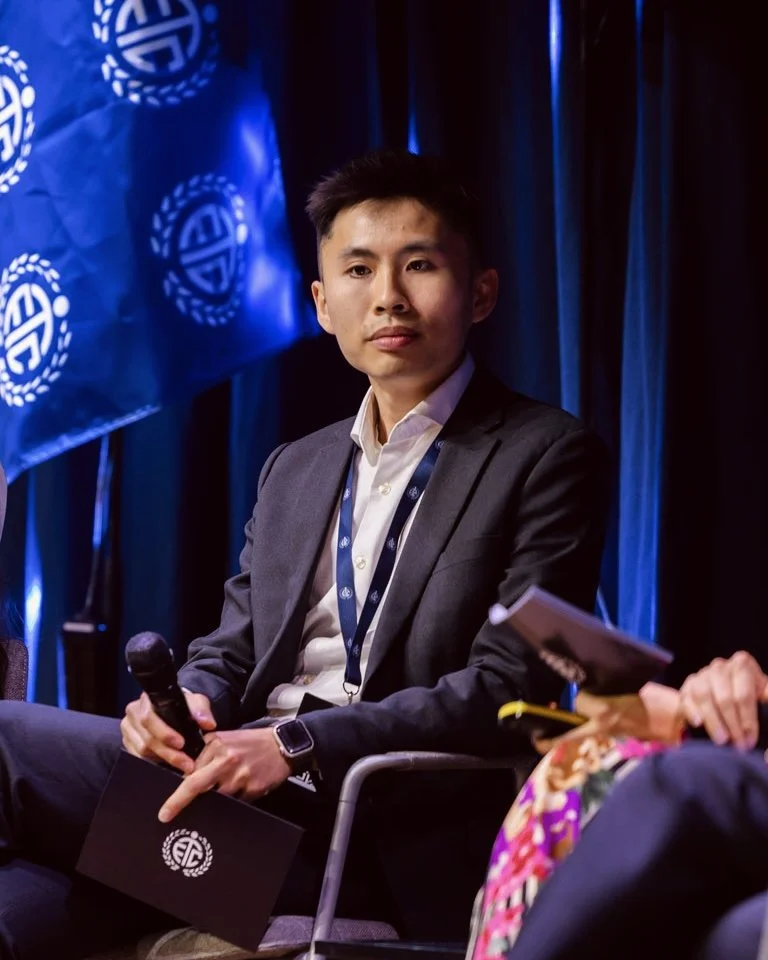
What 20 million job postings tell us about early careers
A central part of JA’s participation was the presentation of Widening the Scope of Job Search: How Human-Centric Skills and Experience Are Redefining Early Careers.
Developed through the Future Talent Council’s Emerging Leaders Ecosystem in collaboration with JA Worldwide, JA Institute, and Revelio Labs, the research examines nearly 20 million job postings across 20 countries, tracking 26 skills and changes in hiring demand since 2021. The project was developed by Júlia Rocha, Brandon Kopp, Nathaly Zamarripa, and Neil Sekhri, with supervision from Howard Leong and Emmalyn Green.
The research challenges the idea that young people simply need to acquire more credentials or narrowly technical skills to succeed. Instead, it points toward a broader and more realistic understanding of employability—one that combines technical knowledge, human-centric capabilities, practical experience, and access to meaningful professional networks.
One of the clearest findings is that 63.4% of all tracked-skill mentions in job postings relate to durable, human-centric skills, including communication, leadership, teamwork, and collaboration. These are not secondary or optional capabilities. They form much of the common language employers use across roles, industries, and education levels.
At the same time, technical expertise rarely stands alone. Nearly two-thirds of postings requiring a technical skill also request at least one human-centric skill. The combination matters financially, too: roles pairing technical and durable skills had the highest average salaries in the analysis, producing a 7% premium over roles asking for durable skills alone.
However, the research also identifies a structural challenge. Entry-level demand has remained below demand for senior talent throughout the period studied. Survey findings reinforce the frustration young people experience: 63% of respondents believe entry-level jobs require unrealistic amounts of experience, while 70% consider the current entry-level job market unfair.
This gap cannot be addressed by telling young people simply to work harder, collect more certifications, or perfect their résumés. Employers also have a role to play. Job descriptions should be audited to ensure they provide accurate and realistic signals about the experience, credentials, and skills a role genuinely requires.
As Howard Leong mentioned at the Summit, when AI can increasingly orchestrate complex workflows, the ability to identify the right problem—and exercise good judgment about which problems are worth solving—becomes even more valuable.
For young people, the message is not to choose between human and technical skills. It is to develop both and to widen the search beyond job titles and traditional career paths by identifying where their capabilities, experiences, and interests can create value.
Following final edits, the interactive research dashboard will be published by JA Institute at ja.institute/widening-the-scope-of-job-search.
World Youth for Action Listening Labs
Our time in Stockholm was also an opportunity to conduct interviews connected to World Youth for Action, JA Worldwide’s flagship, multi-year youth-advocacy initiative.
World Youth for Action is designed to position young people ages 16–29 as equal contributors to the decisions, policies, and systems shaping their lives. Its 2026 theme asks an ambitious question: What should follow the United Nations Sustainable Development Goals after 2030?
Through interviews, virtual cohorts, regional listening activities, research, storytelling, and intergenerational dialogue, participants will develop youth-led recommendations for the future of global development. The process will include a global convening in India in November 2026, followed by the presentation of recommendations to the United Nations in 2027.
These conversations were an important reminder that data can describe what is happening, but young people’s lived experiences help us understand what those changes actually mean. Building effective education, employment, and development systems requires both.
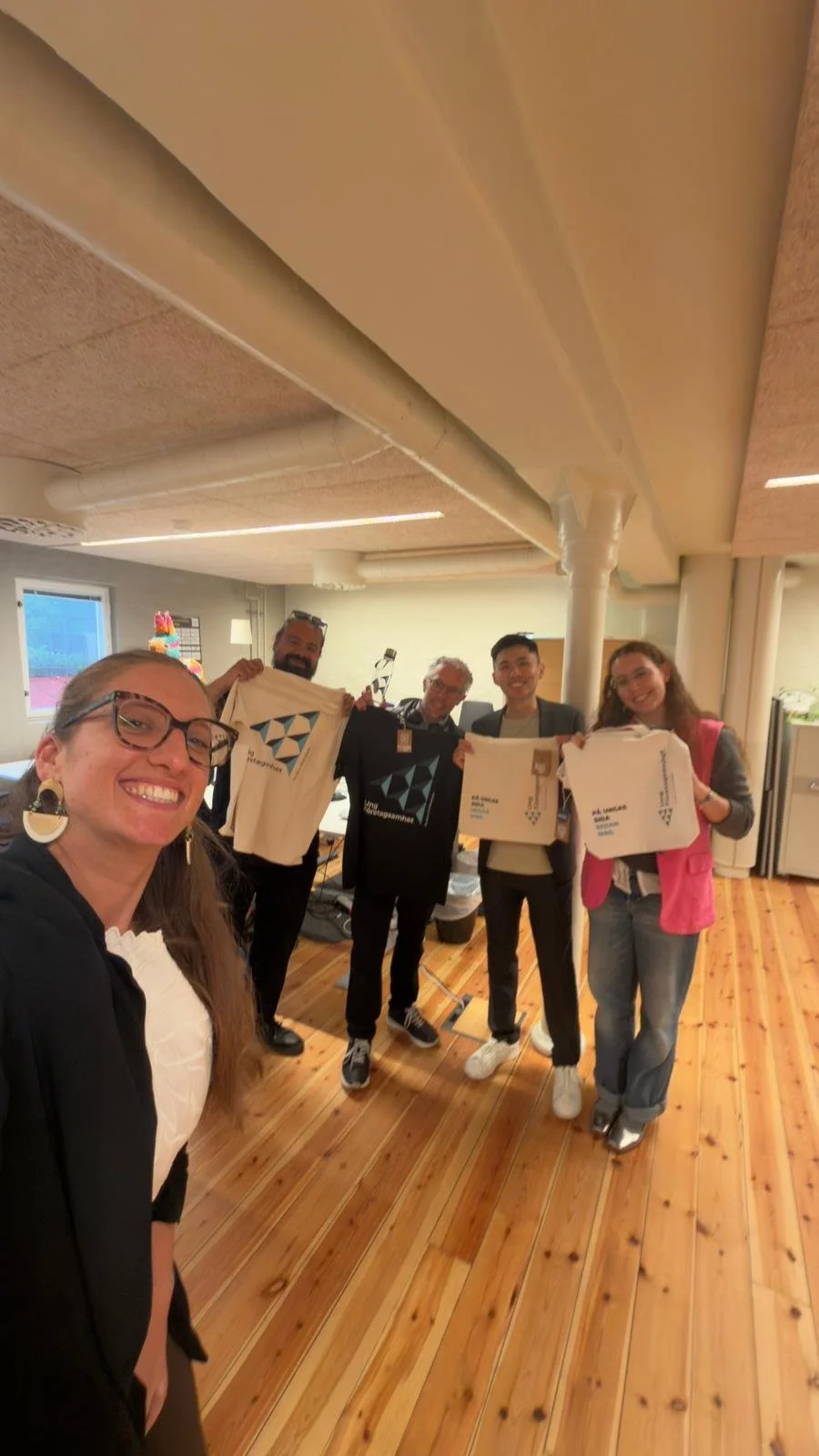
Impact of Ung Företagsamhet, JA Sweden
The visit also brought colleagues from across the JA network together, including Federica from JA Americas, and gave us the opportunity to spend time with the team at Ung Företagsamhet, JA Sweden.
Our visit coincided with the rollout of JA Sweden’s updated visual identity. The new identity retains the Ung Företagsamhet name and its vision of a society in which every young person can develop their entrepreneurial abilities, while making its connection to the global Junior Achievement movement more visible through an aligned logo, colors, typography, and design system.
The visit offered an opportunity to exchange perspectives, learn more about JA Sweden’s work, and celebrate a brand evolution that brings local identity and global belonging together. Thank you to Tove Jarl, Pontus Ekstam, Carsten Greiff, and the wider JA Sweden team for welcoming the delegation and creating space for conversation and connection.