
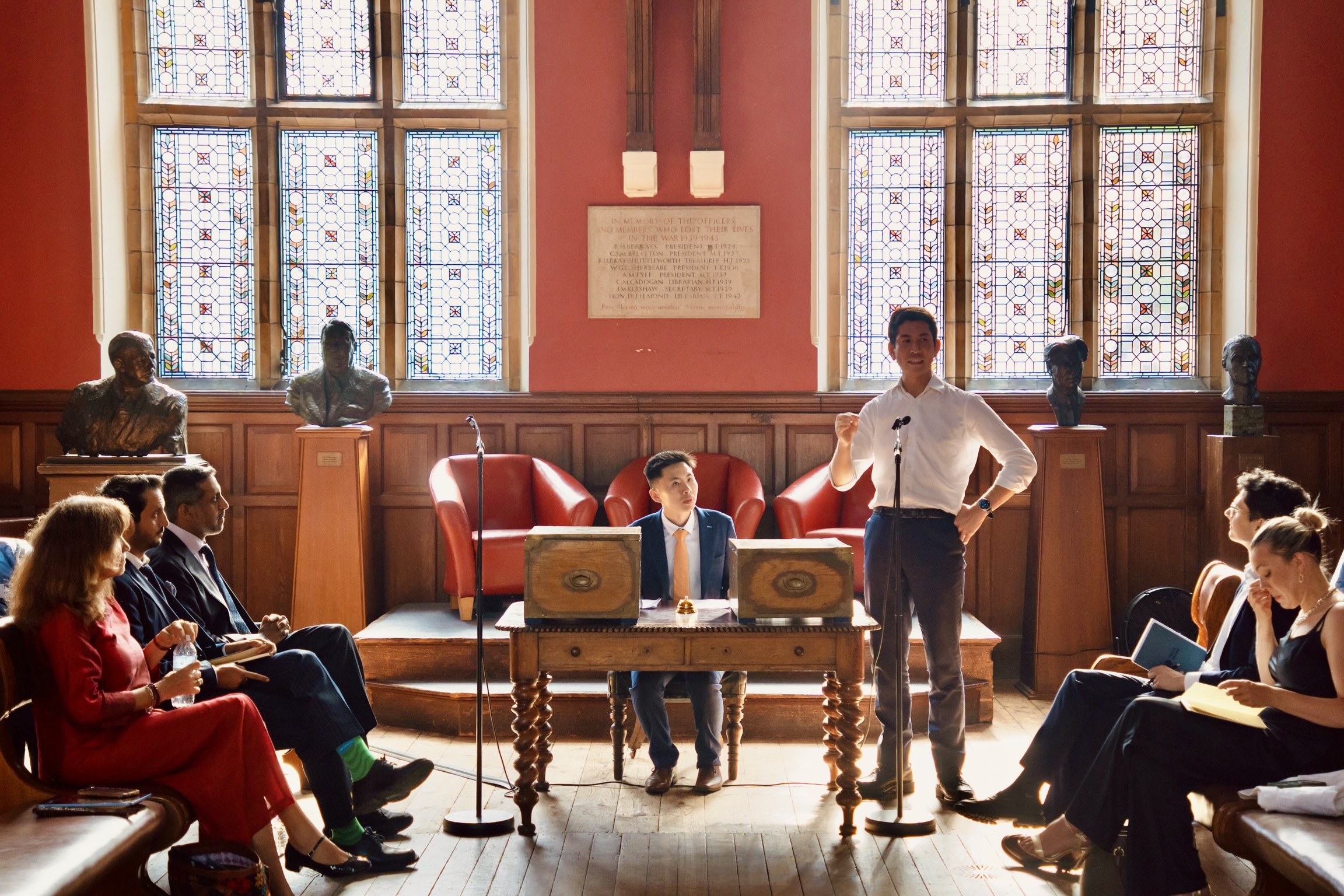
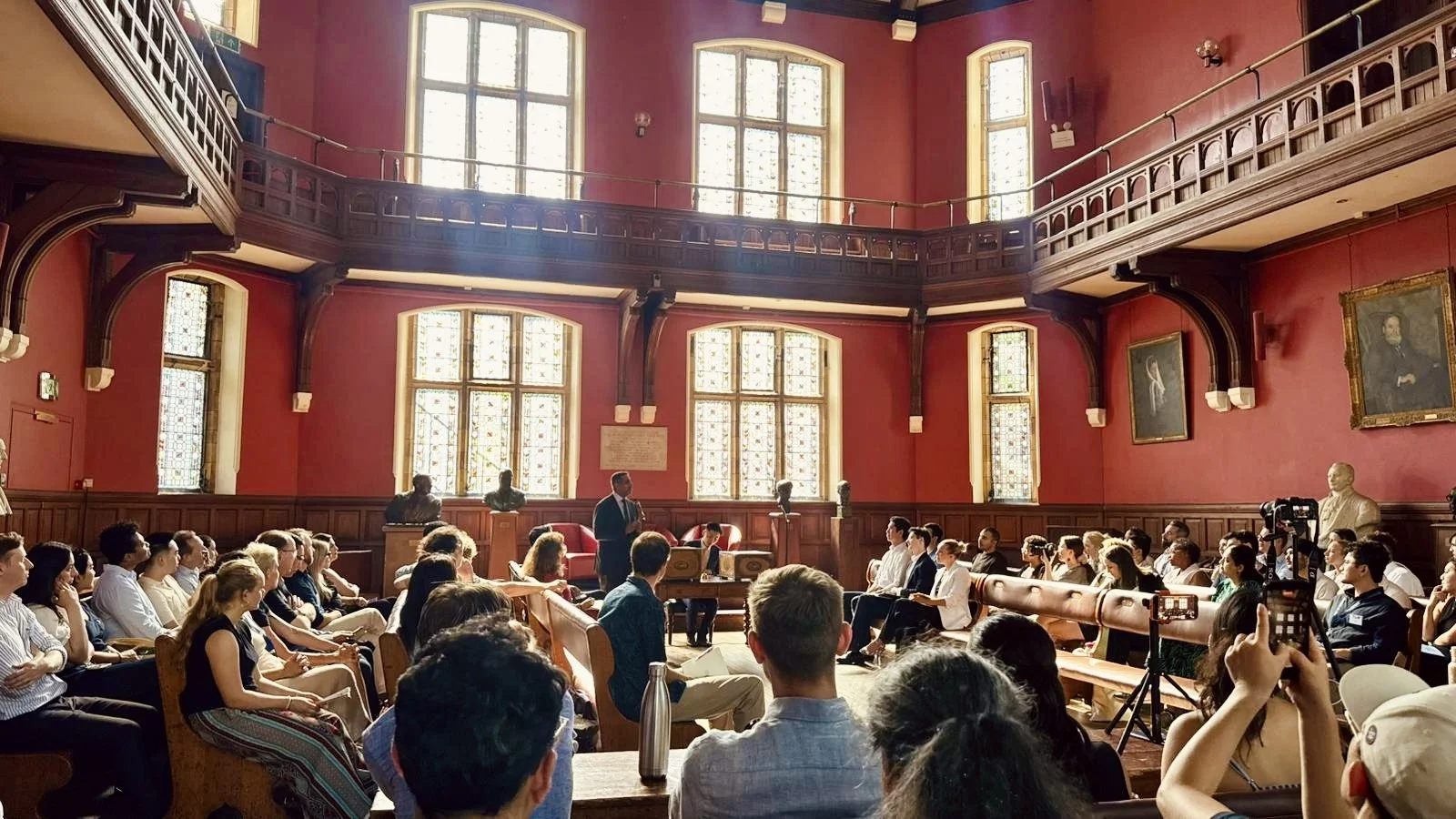
Howard Leong, Director of Research and Data Science at JA Worldwide, chairing the Oxford Connected Life Summit and the debate on This House Believes that AI is the Great Equalizer in the Oxford Union.
At the Oxford Union on June 25, JA leaders and partners joined the Connected Life Summit 2026 and explored how artificial intelligence can expand opportunity while preserving human agency, judgment, and accountability.
Organized with support from the Oxford Internet Institute, the Summit brought researchers, business leaders, policymakers, and practitioners together under the theme “New Intelligence, Old Questions.” Through smaller working sessions and a public Oxford Union debate, participants examined not only what rapidly advancing technologies can do, but also who shapes them, whom they serve, and how they can be governed responsibly.
JA Worldwide’s Director of Research and Data Science Howard Leong chaired the conference, moderated discussions during the day, and hosted the concluding debate in the Oxford Union’s historic Debate Chamber.
Several members of the wider JA community helped shape the conversations:
Pamela Maynard OBE, Vice Chair of the JA Worldwide Board of Governors and Chief AI Transformation Officer at Microsoft
Dr. Asheesh Advani, President and CEO of JA Worldwide
Vikas Pota, Founder of T4 Education and the World’s Best School Prizes
Vilas Dhar, President of the Patrick J. McGovern Foundation
Professor David Johnson, Professorial Fellow at the University of Oxford and member of the JA Institute Research Advisory Council
Their participation reflected the range of perspectives needed to understand AI’s implications for education and young people—from technology and philanthropy to teaching, research, entrepreneurship, and youth development.

Pamela Maynard interviewed by Parmy Olson, Bloomberg Technology Columnist
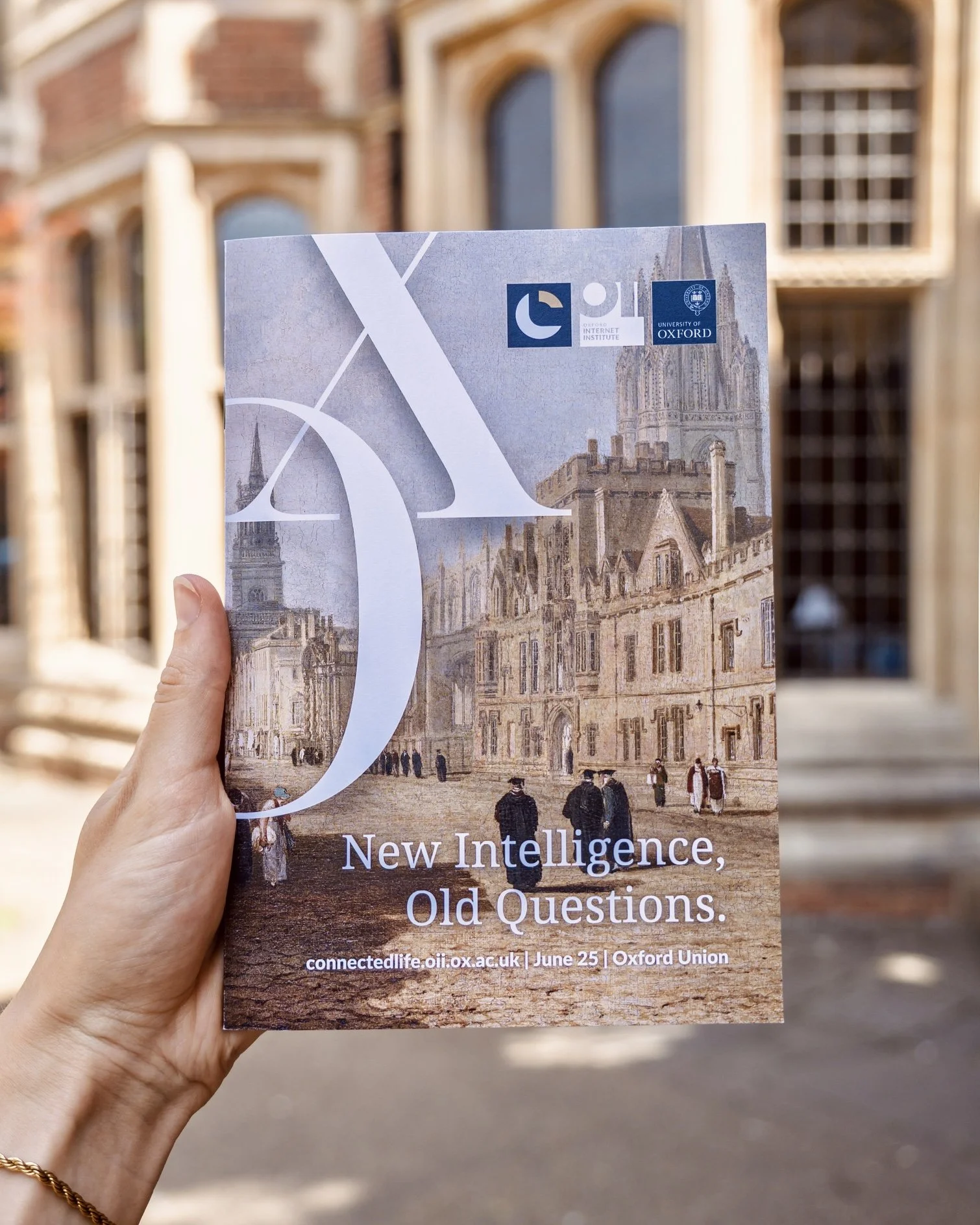
Conference brochure
From “Can AI do this?” to “Should AI do this?”
One of the central education conversations was framed around a deceptively simple question: Should AI do all of it?
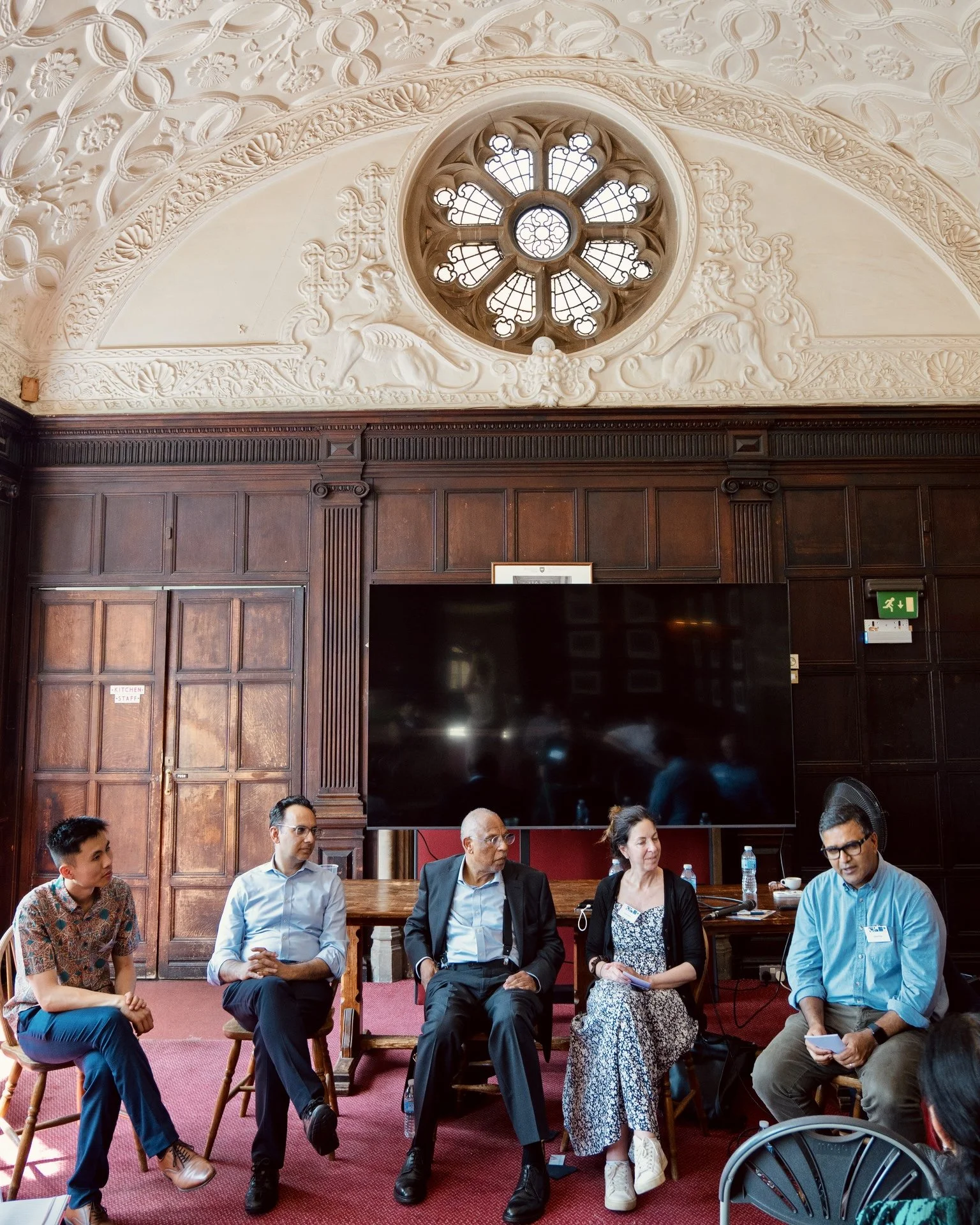
As artificial intelligence becomes increasingly capable, inexpensive, and widely available, technical feasibility is no longer the only consideration. The more important questions concern where AI genuinely improves people’s lives, where it might reproduce existing inequalities, and which decisions should remain fundamentally human. Howard led the education discussion with Asheesh, Vikas, Lisa Felton (Managing Director, Vodafone Foundation) and Professor Johnson, bringing together complementary perspectives on innovation, human development, and educational psychology.
Demonstrating human-centered AI through JA Boost
The Summit also moved from principles to practical application.
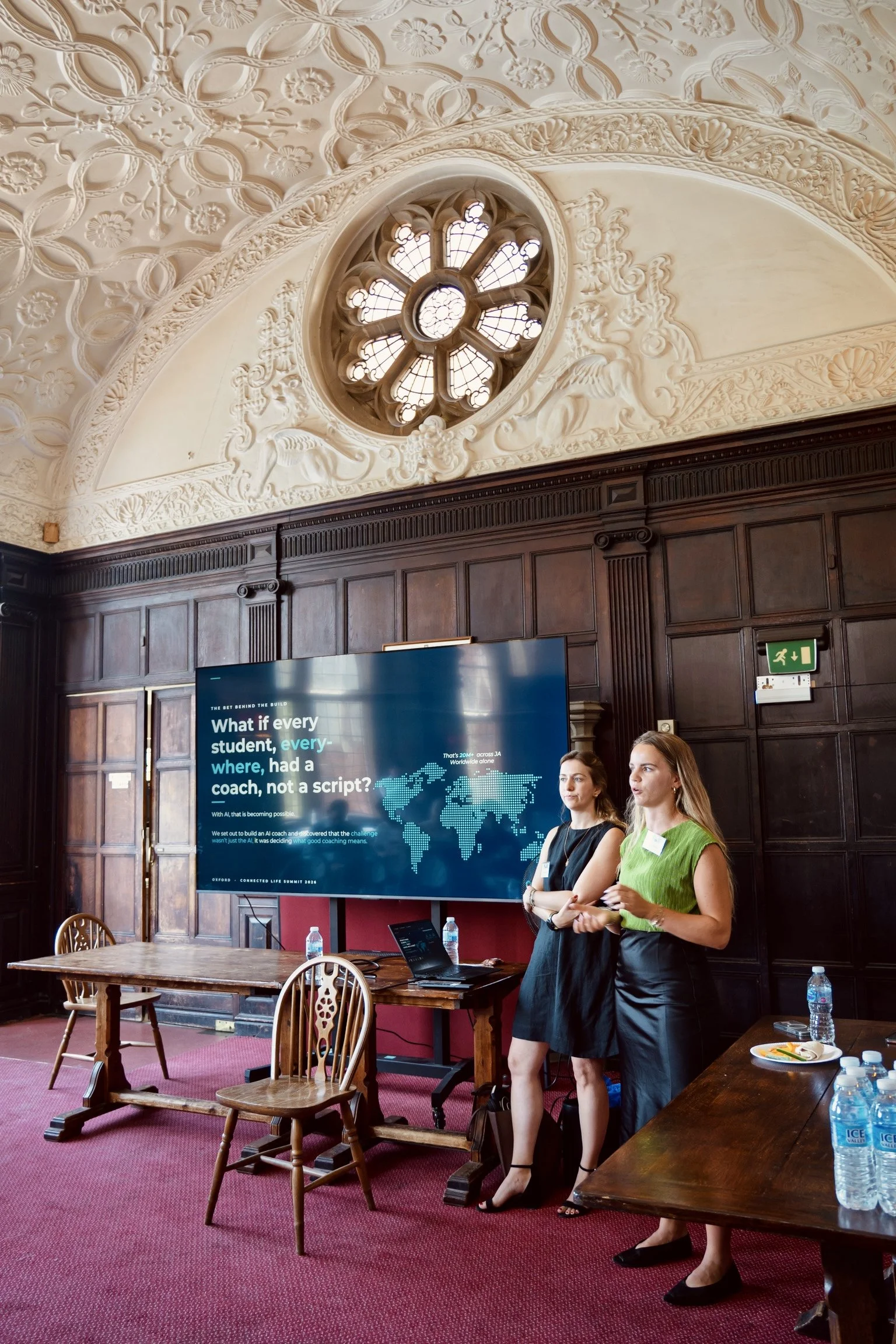
Our partners from McKinsey & Company, Kristina Wienhoefer and Sabrina Bruenig, led a session on human-centered coaching agents, featuring work connected to JA Boost. The session explored how AI-enabled coaching can be designed around human needs and deployed responsibly to support learners.
JA Boost represents an important opportunity to test what responsible AI can look like in youth development: technology that expands access to guidance and personalized support while remaining grounded in trusted learning experiences and the expertise of educators and JA practitioners.
McKinsey’s subsequent reflection on the session highlighted the relationship between AI for good, responsible AI, and the practical design of tools intended to create social impact.
Can AI become a great equalizer?
The day concluded with a public debate on the motion: “This House Believes AI Is the Great Equalizer.”
Howard hosted the debate, with Vilas joining the proposition alongside Oxford Martin School Senior Research Fellow Dr. Fazl Barez and former UNESCO Assistant Director-General Gabriela Ramos. The opposition included Dr. Rachel Adams of the Leverhulme Centre for the Future of Intelligence, Huw Roberts of Oxford Internet Institute, and Dex Hunter-Torricke from The Center for Tomorrow.
The motion captured one of the defining tensions surrounding AI.
Artificial intelligence could reduce barriers to information, personalized support, and expert knowledge. For a young person who lacks access to a tutor, professional network, or specialized teacher, well-designed AI tools could create opportunities that were previously unavailable.
At the same time, technology does not enter an equal world. Differences in connectivity, language, digital literacy, institutional capacity, and influence over the design of AI systems can deepen existing divides. Whether AI becomes an equaliser therefore depends less on the technology alone than on the choices made by developers, governments, schools, funders, and communities.
The debate reinforced that access is only the beginning. Meaningful equality also requires people to have the knowledge and confidence to question AI, understand its limitations, and use it in ways that advance their own goals.

Gabriela Ramos presenting the proposition argument.
Oxford Union debate chamber